Nayana K G · MBA — PES College of Engineering, Mandya
AgriGuard — How Can a Smart Agriculture Support System Help Farmers Manage Unpredictable Weather?

Summary
Methods
Disciplinary perspectives
Farmers depend heavily on the weather for cultivation, yet sudden rainfall, droughts, floods, and extreme temperatures regularly damage crops and cut into their income. This project, developed during the PitchX Programme, asks how a combination of storage infrastructure and digital support could help farmers absorb these shocks and manage their land more effectively.
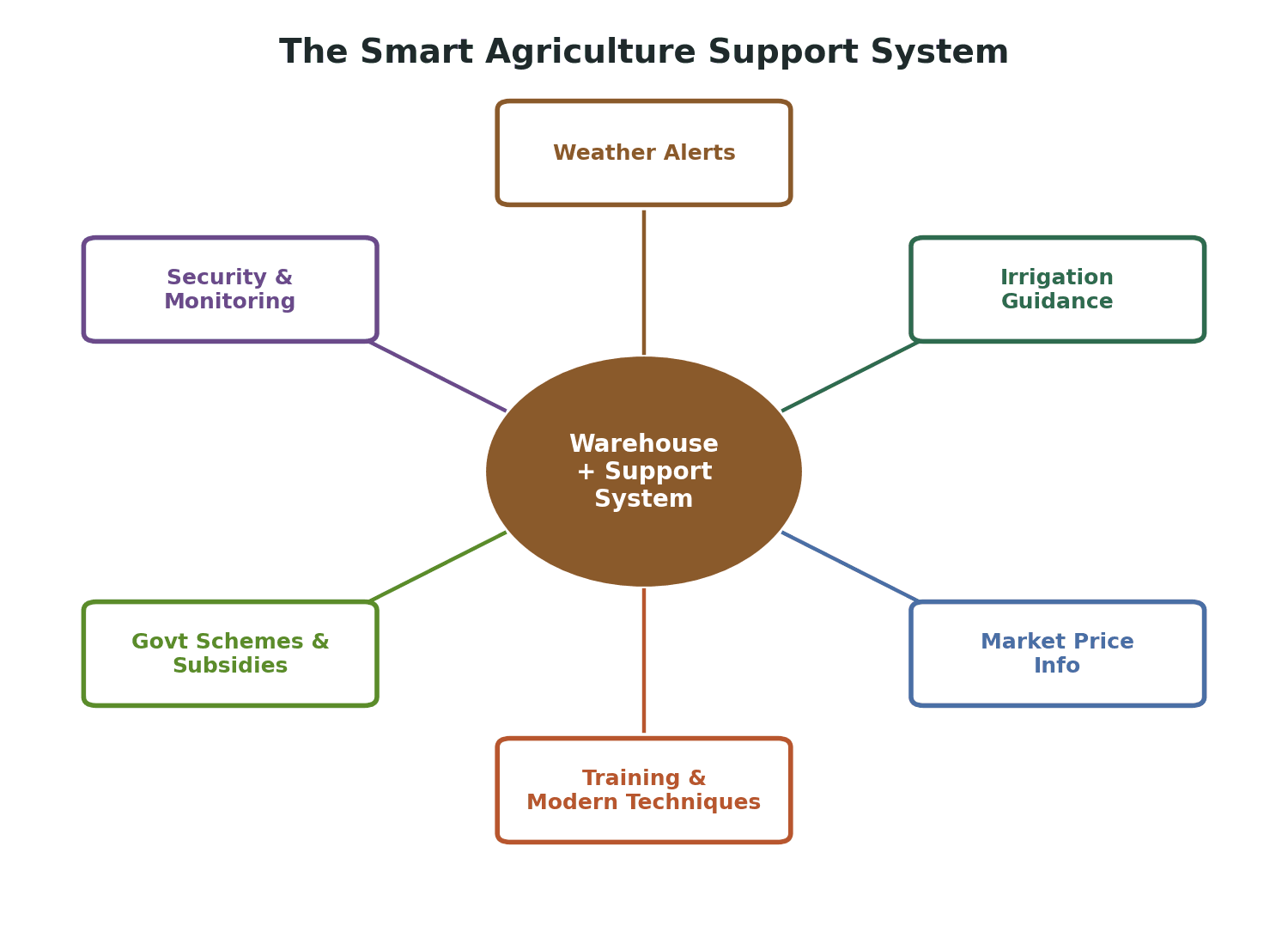
The proposed response is a Smart Agriculture Support System: low-cost warehouse facilities paired with weather alerts, irrigation guidance, market price information, training, and access to government schemes — addressing storage and information gaps side by side rather than treating them separately.
Approach and Methodology
The project began with a team discussion of the difficulties farmers face because of unpredictable weather, and how those difficulties compound with other structural gaps. Beyond weather risk itself, the team observed that many farmers also lack storage facilities, have limited irrigation support, have insufficient knowledge of modern farming methods, and struggle to access information about government schemes — all of which make it harder to earn a stable income.
These observations were consolidated into a single pain point: the lack of proper storage and support facilities. After harvest, crops are frequently damaged by unexpected weather, and without a safe place to store them, many farmers are forced to sell immediately rather than wait for a better price. Compounding this, farmers often do not receive timely information about weather, market prices, farming techniques, or government support — leaving them to make high-stakes decisions with incomplete information.
Proposal / Outcome
The resulting concept is a Smart Agriculture Support System built around warehouse facilities where farmers can safely store harvested crops, protecting them from rain, moisture, and other weather-related damage. Around this storage core, the team proposed a linked set of services: weather updates and alerts, irrigation and water management guidance, market price information, training in modern farming techniques, information on government schemes and subsidies, and security and monitoring for stored produce.
Combining storage, technology, and farmer support in one system is intended to reduce crop losses, help farmers sell at better prices instead of being forced into early distress sales, improve awareness of financial support, and encourage the adoption of modern, more productive farming practices — improving both income and financial stability over time.
Beyond Outcomes
Looking ahead, the team sees this as a starting point rather than a finished system. Future versions could add smart irrigation, soil testing, drone monitoring, and mobile applications to give farmers richer, real-time decision support, and could connect farmers directly to markets so they can sell at fairer prices without intermediaries.
Framed this way, the project treats agricultural risk as something that can be managed jointly through infrastructure and information — reducing risk, increasing production, and ultimately improving farmers' income and quality of life.
About me

Nayana K G
MBA, PES College of Engineering, Mandya
I'm Nayana K G, currently pursuing a Master of Business Administration (MBA) at P.E.S. College of Engineering, Mandya. I enjoy learning new concepts and transforming ideas into practical solutions, and bring skills in Tally, Microsoft Excel, and Microsoft Word to my project work. I completed my internship at Mysore City Corporation, Mysuru, gaining experience in a professional work environment, and hold a Future Skills Prime certificate that has strengthened my digital and professional competencies. Through this project, I aim to explore innovative ways of using technology to support farmers, improve agricultural practices, and contribute to sustainable development.
Other Related Projects
← Back to the repository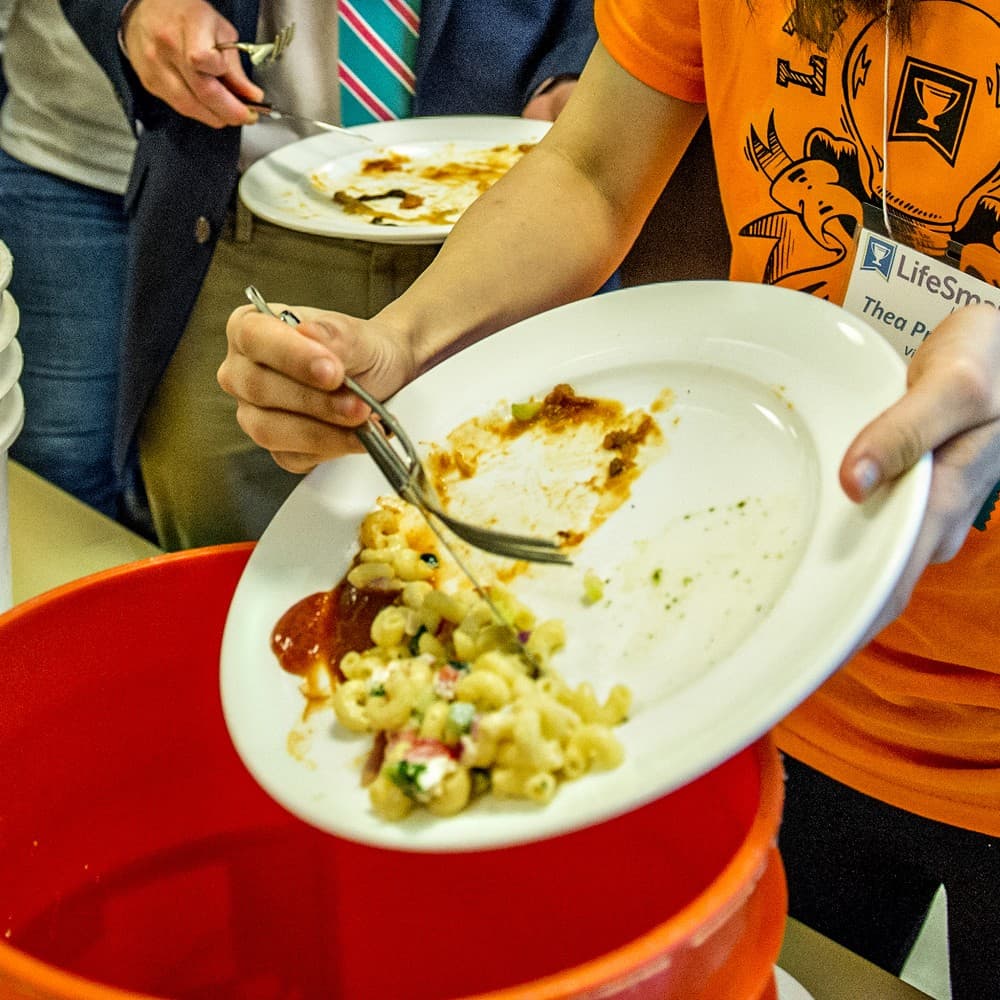
MessWise — Why Is So Much Food Wasted Daily in Colleges and Institutions?
This project asks why so much food is wasted every day in colleges and institutions, and what can realistically be done about it. Rather than treating waste as a single problem, it traces the issue back through its causes — overproduction, poor demand estimation, fixed menus, oversized portions, low awareness, food quality, improper storage, and one-off events — and forward through its effects: economic loss, environmental impact, wasted resources, and missed opportunities for redistribution. The central finding is that food waste in institutional canteens is not one person's problem. It sits at the intersection of student behaviour, institutional planning, logistics, and public attitudes — which means any solution has to work across all four groups at once, not just target one of them.
#Sustainability#Food#Education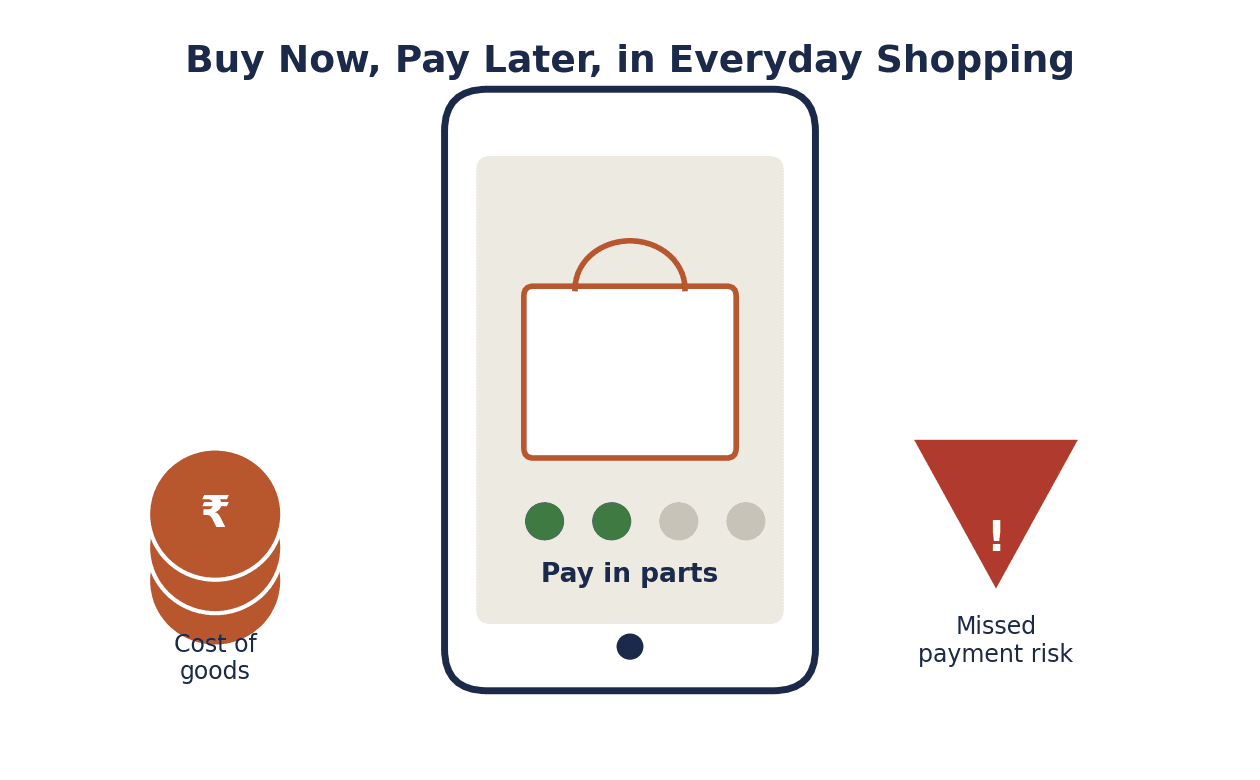
Does Buy Now, Pay Later Help or Hurt People's Money Habits?
Buy Now, Pay Later — usually called BNPL — lets people buy something today and pay for it in small parts later, often without any extra interest cost. It is very popular with people who shop online, because it makes things feel cheaper and easier to buy right away. But for some people, BNPL also brings worry about money and debt. This project asks a simple question: does BNPL really help people manage their money better, or does it quietly cause more financial stress than people realise? It looks at the feelings, habits, and real money outcomes of BNPL users together, instead of studying each one on its own.
#Finance#Consumer Behaviour#Digital Payments
E-Hub — How Can a Smart Hub Solve India's EV Charging Bottleneck?
India's transportation sector is shifting rapidly toward electric vehicles, but charging infrastructure has not kept pace — leaving EV users with limited stations, long waits, and few nearby services. This project proposes E-Hub, a smart electric vehicle charging and service center that combines fast charging, maintenance, digital payments, real-time charger availability, and customer amenities in a single location. By integrating renewable energy sources such as solar power with modern charging technology, E-Hub is designed to make EV charging more convenient, reliable, and sustainable — supporting clean transportation and a future-ready charging ecosystem.
#Clean Energy#Technology#Mobility