Thanushree D & Sangeetha J · MBA — Year 1, PES College of Engineering, Mandya — PitchX Programme
PlateWise — How Can a Smart Plate System Reduce Food Waste in College Canteens?
Summary
Methods
Disciplinary perspectives
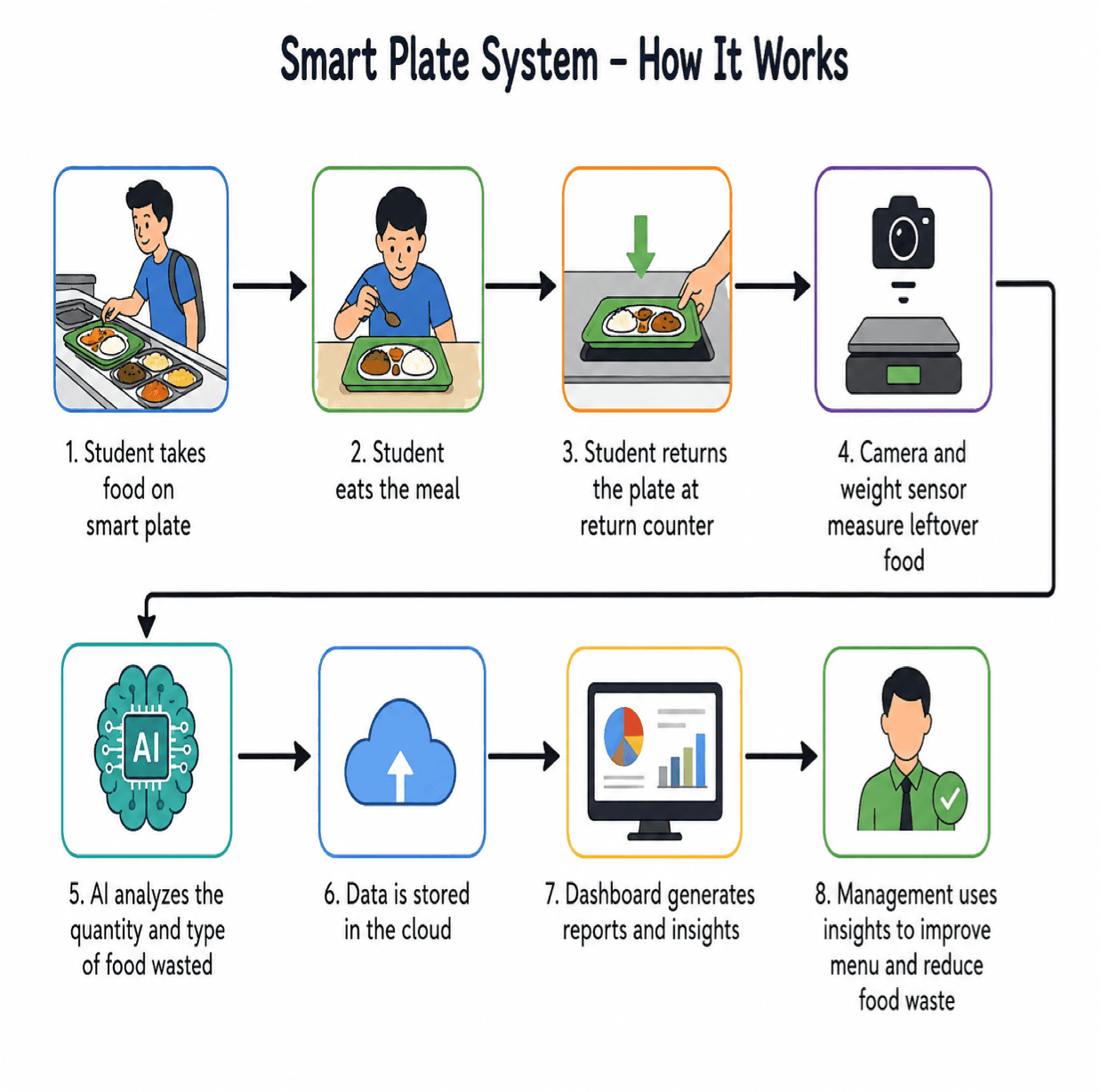
Working independently during the PitchX Programme, Thanushree D and Sangeetha J arrived at the same core idea: a Smart Plate System that uses weight sensors, AI, and a mobile app to monitor food served, consumed, and wasted in real time in school and college canteens. This showcase brings their two projects together, since both diagnose the same problem and propose essentially the same technology answer to it.
Two independent teams reaching the same design is itself a useful signal — it suggests the Smart Plate concept addresses a need that canteen users and observers recognise consistently, not just a one-off idea. Together, their work gives a fuller picture: Thanushree's project details the system's features and process flow, while Sangeetha's names the specific problems it targets and the benefits it is expected to deliver.
Approach and Methodology
Both projects start from the same observation. Thanushree's team noted that a significant amount of food is wasted every day in school and college canteens, because canteens prepare meals based on estimates rather than actual demand, while students often take more food than they need. Sangeetha's project frames the same pattern in her own words: canteens face a major challenge of food wastage because meals are prepared based on estimates rather than actual demand, while students frequently take more food than they can eat — leading to financial losses, inefficient resource use, and negative environmental impact.
Thanushree's team additionally identified three specific pain points behind the waste: high waste from large, fixed portion sizes; poor visibility for canteen management, who lack real-time consumption data; and behavioural friction, where queues and crowd pressure push students toward over-serving. Regional estimates put canteen food waste as high as 40% of purchased food. Sangeetha's project names a complementary set of problems: excess food preparation, students taking more than required, a lack of food waste monitoring, high operational costs, poor nutrition awareness, and the environmental impact of food waste.
Proposal / Outcome
Thanushree's Smart Plate System combines IoT sensors and artificial intelligence to monitor food served, consumed, and wasted in real time. A companion mobile app shows students live information on calories, protein, carbohydrates, fats, and portion size, while letting them pre-book meals, customise them, and cancel or modify an order before a cut-off time. A camera and weight sensor at the plate-return counter measure leftover food automatically, and an AI model analyses and stores this data in the cloud, where a dashboard turns it into reports canteen managers can use to refine menus and target waste reduction.
Sangeetha's project describes the same underlying system — an IoT- and AI-based food monitoring system using weight sensors, AI-based food recognition, and a mobile application — and adds a clear list of expected benefits: it reduces food wastage, improves canteen efficiency, saves food and operational costs, promotes healthy eating habits, provides accurate nutrition information, and supports sustainable campus initiatives.
Expected benefits (combined): reduces food wastage and improves canteen efficiency; saves food and operational costs; promotes healthy eating habits and accurate nutrition information; supports sustainable campus initiatives; improves portion control and gives managers real demand data instead of guesswork. Thanushree's team estimates the system could cut food waste by roughly 30% relative to current levels.
Beyond Outcomes
Thanushree's project sets out a practical path to test the idea: piloting it in a single canteen, training canteen staff and other stakeholders, integrating it with existing point-of-sale and menu-management systems, and measuring baseline waste levels first so any pilot can be judged on a genuine before-and-after comparison.
Seen alongside Sangeetha's project, this next-step plan gains extra weight: it is not just one team's proposal but a direction two independent students converged on, which strengthens the case for treating the Smart Plate System as a serious candidate for a real pilot rather than a one-off classroom exercise.
About the authors
Thanushree D
MBA — Year 1, PES College of Engineering, Mandya
I'm Thanushree D, a first-year MBA student at P.E.S. College of Engineering, Mandya, with a strong interest in learning, personal growth, and developing my management skills. I'm skilled in Microsoft Word, Excel, PowerPoint, and Tally, and my hobbies — drawing and making crafts — help me express my creativity and stay focused. One of my greatest strengths is adjusting quickly to changing environments and taking on new challenges with a positive attitude.
Sangeetha J
MBA — Year 1, PES College of Engineering, Mandya
I'm Sangeetha J, a first-year MBA student at PES College of Engineering, Mandya. I'm passionate about learning and developing new skills, and I'm proficient in Microsoft Word, Excel, PowerPoint, and Tally. In my leisure time, I enjoy listening to music and reading books, which help me relax, improve my creativity, and expand my knowledge. My goal is to continuously improve my skills and become a successful management professional who can contribute positively to an organisation.
Other Related Projects
← Back to the repository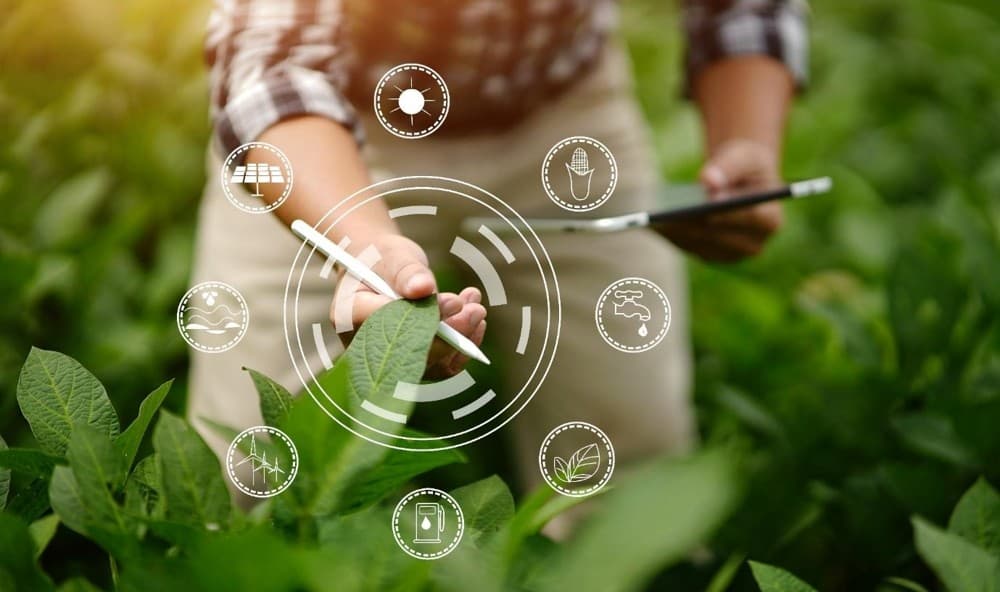
AgriGuard — How Can a Smart Agriculture Support System Help Farmers Manage Unpredictable Weather?
Farmers depend heavily on the weather for cultivation, yet sudden rainfall, droughts, floods, and extreme temperatures regularly damage crops and cut into their income. This project, developed during the PitchX Programme, asks how a combination of storage infrastructure and digital support could help farmers absorb these shocks and manage their land more effectively. The proposed response is a Smart Agriculture Support System: low-cost warehouse facilities paired with weather alerts, irrigation guidance, market price information, training, and access to government schemes — addressing storage and information gaps side by side rather than treating them separately.
#Agriculture#Sustainability#Technology
Does Buy Now, Pay Later Help or Hurt People's Money Habits?
Buy Now, Pay Later — usually called BNPL — lets people buy something today and pay for it in small parts later, often without any extra interest cost. It is very popular with people who shop online, because it makes things feel cheaper and easier to buy right away. But for some people, BNPL also brings worry about money and debt. This project asks a simple question: does BNPL really help people manage their money better, or does it quietly cause more financial stress than people realise? It looks at the feelings, habits, and real money outcomes of BNPL users together, instead of studying each one on its own.
#Finance#Consumer Behaviour#Digital Payments
E-Hub — How Can a Smart Hub Solve India's EV Charging Bottleneck?
India's transportation sector is shifting rapidly toward electric vehicles, but charging infrastructure has not kept pace — leaving EV users with limited stations, long waits, and few nearby services. This project proposes E-Hub, a smart electric vehicle charging and service center that combines fast charging, maintenance, digital payments, real-time charger availability, and customer amenities in a single location. By integrating renewable energy sources such as solar power with modern charging technology, E-Hub is designed to make EV charging more convenient, reliable, and sustainable — supporting clean transportation and a future-ready charging ecosystem.
#Clean Energy#Technology#Mobility