Mohammed Maaz · BCA, Shree Veda College, Bangalore
TransitPulse — Can Smart Sensors and Predictive Routing Fix Public Transport's Reliability and Comfort Problems?
Summary
Methods
Disciplinary perspectives
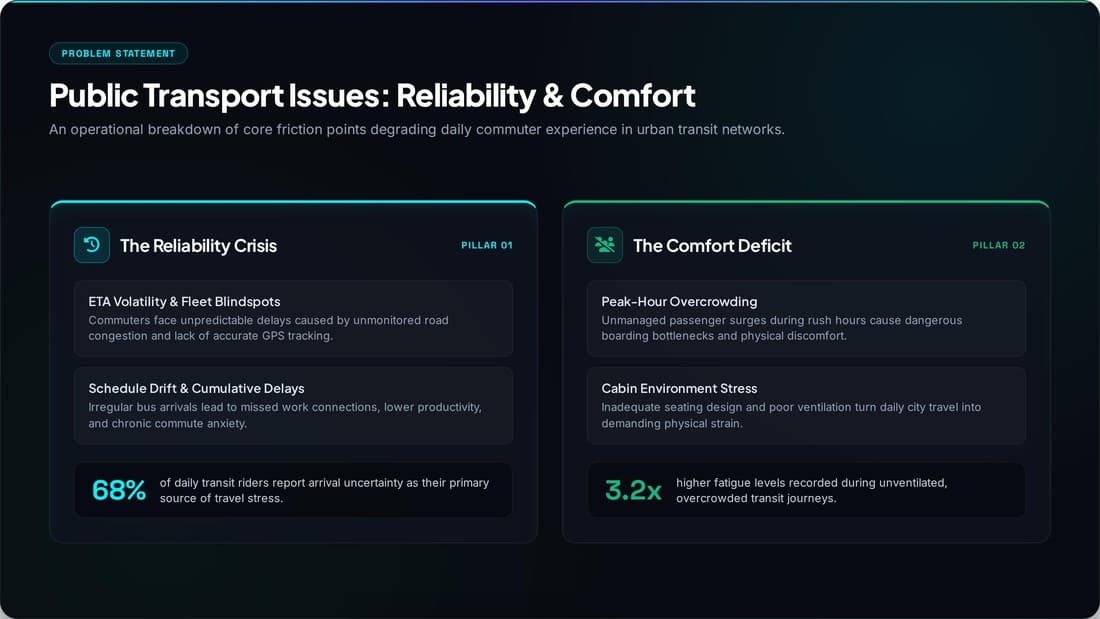
This project breaks down daily public transport frustration into two linked problems: a reliability crisis, where riders can't trust when a bus will actually arrive, and a comfort deficit, where the ride itself is overcrowded and physically demanding. It then proposes an Integrated Smart Mobility Framework — a three-part technology system designed to make fleets more predictable and journeys more comfortable at the same time.
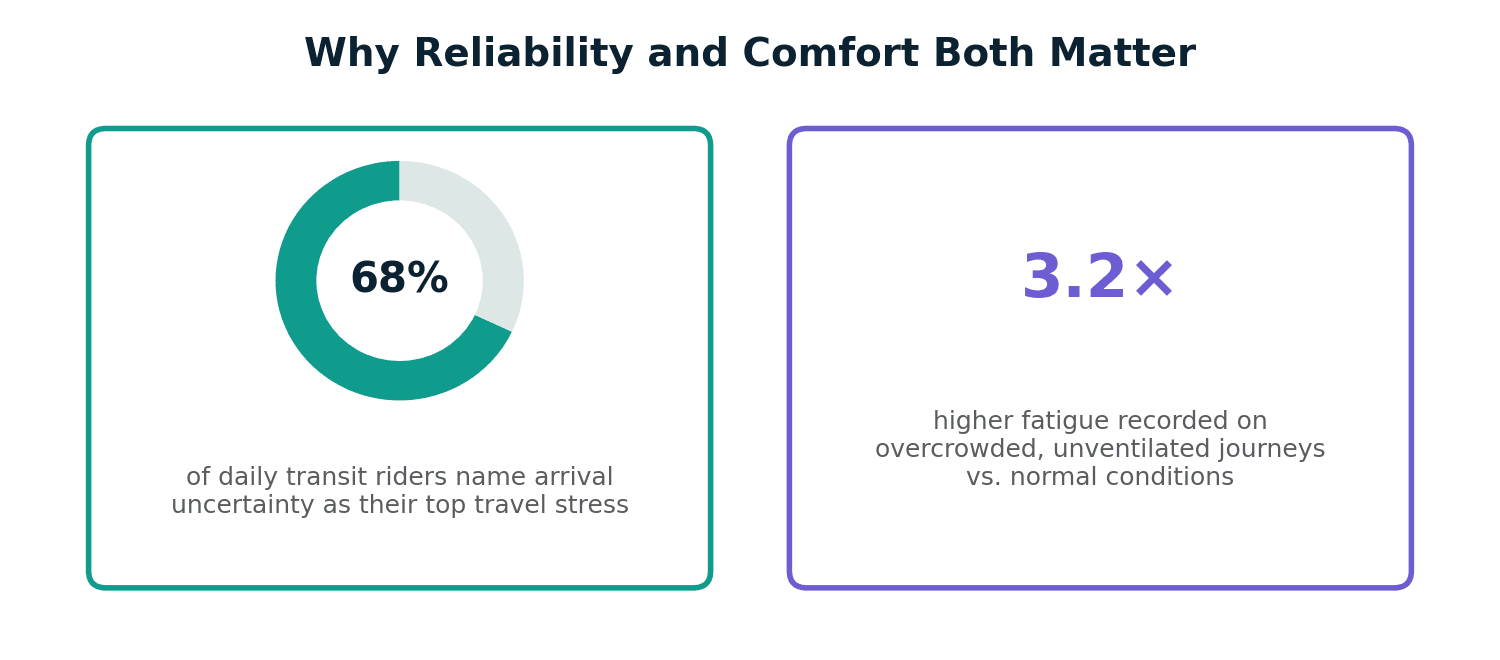
The case for action is backed by two figures from the research: 68% of daily transit riders report arrival uncertainty as their primary source of travel stress, and commuters record 3.2× higher fatigue levels on unventilated, overcrowded journeys.
Approach and Methodology
The analysis splits the operational breakdown of urban transit into two pillars. The first is the reliability crisis: commuters face unpredictable delays caused by unmonitored road congestion and a lack of accurate GPS tracking (ETA volatility and fleet blindspots), while irregular bus arrivals compound over a journey into missed work connections, lower productivity, and chronic commute anxiety (schedule drift and cumulative delays).
The second is the comfort deficit: unmanaged passenger surges during rush hours cause dangerous boarding bottlenecks and physical discomfort (peak-hour overcrowding), while inadequate seating design and poor ventilation turn daily city travel into demanding physical strain (cabin environment stress).
Treating reliability and comfort as two separate but connected pillars — rather than one general complaint about "bad buses" — makes it possible to target each with a distinct technical fix, instead of a single blunt solution.
Proposal / Outcome
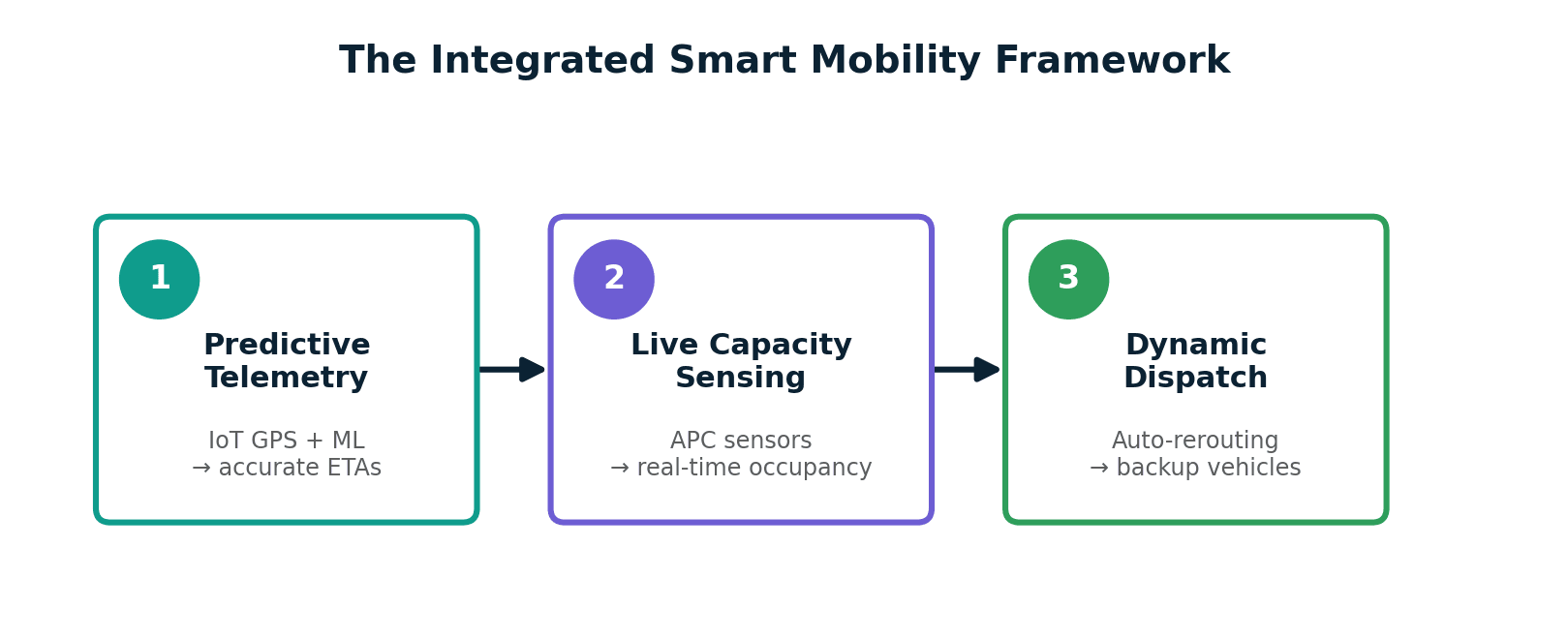
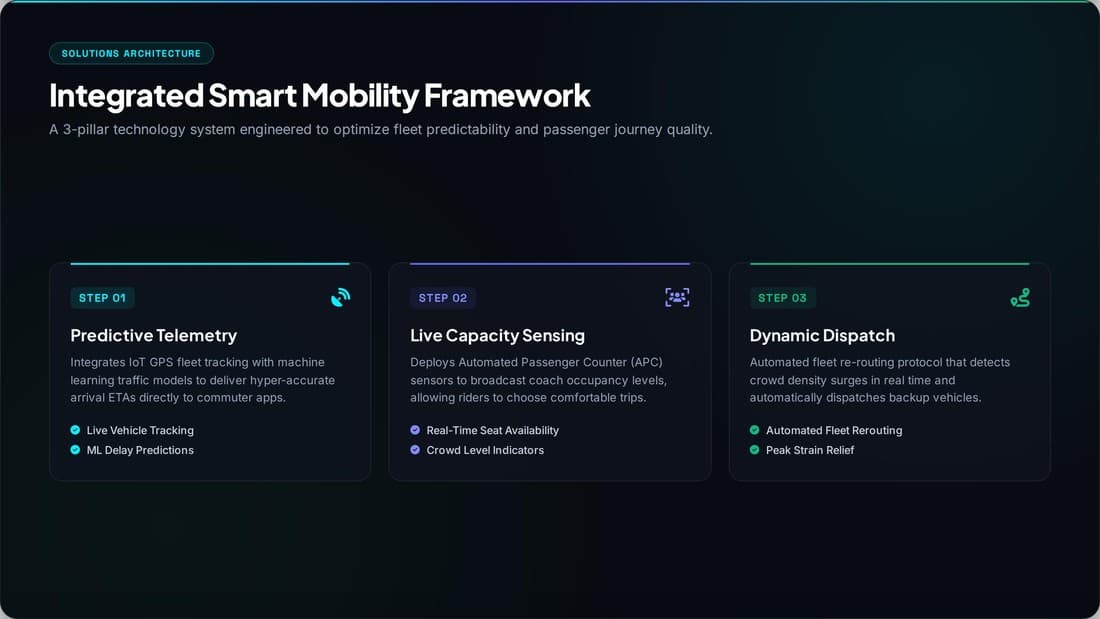
The response is a 3-pillar Integrated Smart Mobility Framework engineered to optimise fleet predictability and passenger journey quality.
Step 1 — Predictive Telemetry: integrates IoT GPS fleet tracking with machine learning traffic models to deliver hyper-accurate arrival ETAs directly to commuter apps, combining live vehicle tracking with ML delay predictions.
Step 2 — Live Capacity Sensing: deploys Automated Passenger Counter (APC) sensors to broadcast coach occupancy levels, giving riders real-time seat availability and crowd-level indicators so they can choose more comfortable trips.
Step 3 — Dynamic Dispatch: an automated fleet re-routing protocol that detects crowd density surges in real time and automatically dispatches backup vehicles, giving automated fleet rerouting and relief at peak strain.
Beyond Outcomes
Read together, the three pillars close the loop between fleet operations and commuter experience: Predictive Telemetry and Dynamic Dispatch work on the operator's side to keep the fleet responsive to real conditions, while Live Capacity Sensing hands that same information back to riders so they can make better decisions about their own journey.
Framed this way, the project's real claim is that reliability and comfort are not separate transit problems to be solved by separate teams — they share the same underlying fix: better real-time data, flowing in both directions between the fleet and the passenger.
About me

Mohammed Maaz
BCA, Shree Veda College, Bangalore
Hi, my name is Mohammed Maaz. I am currently pursuing my Bachelor of Computer Applications at Shree Veda College in Bangalore. I have a strong foundation in software and computing, and I pride myself on my analytical problem-solving skills and ability to adapt quickly to new challenges. I'm currently looking for internship opportunities where I can apply my technical knowledge and strong work ethic to contribute to real-world tech projects.
Other Related Projects
← Back to the repository
E-Hub — How Can a Smart Hub Solve India's EV Charging Bottleneck?
India's transportation sector is shifting rapidly toward electric vehicles, but charging infrastructure has not kept pace — leaving EV users with limited stations, long waits, and few nearby services. This project proposes E-Hub, a smart electric vehicle charging and service center that combines fast charging, maintenance, digital payments, real-time charger availability, and customer amenities in a single location. By integrating renewable energy sources such as solar power with modern charging technology, E-Hub is designed to make EV charging more convenient, reliable, and sustainable — supporting clean transportation and a future-ready charging ecosystem.
#Clean Energy#Technology#Mobility
AgriGuard — How Can a Smart Agriculture Support System Help Farmers Manage Unpredictable Weather?
Farmers depend heavily on the weather for cultivation, yet sudden rainfall, droughts, floods, and extreme temperatures regularly damage crops and cut into their income. This project, developed during the PitchX Programme, asks how a combination of storage infrastructure and digital support could help farmers absorb these shocks and manage their land more effectively. The proposed response is a Smart Agriculture Support System: low-cost warehouse facilities paired with weather alerts, irrigation guidance, market price information, training, and access to government schemes — addressing storage and information gaps side by side rather than treating them separately.
#Agriculture#Sustainability#Technology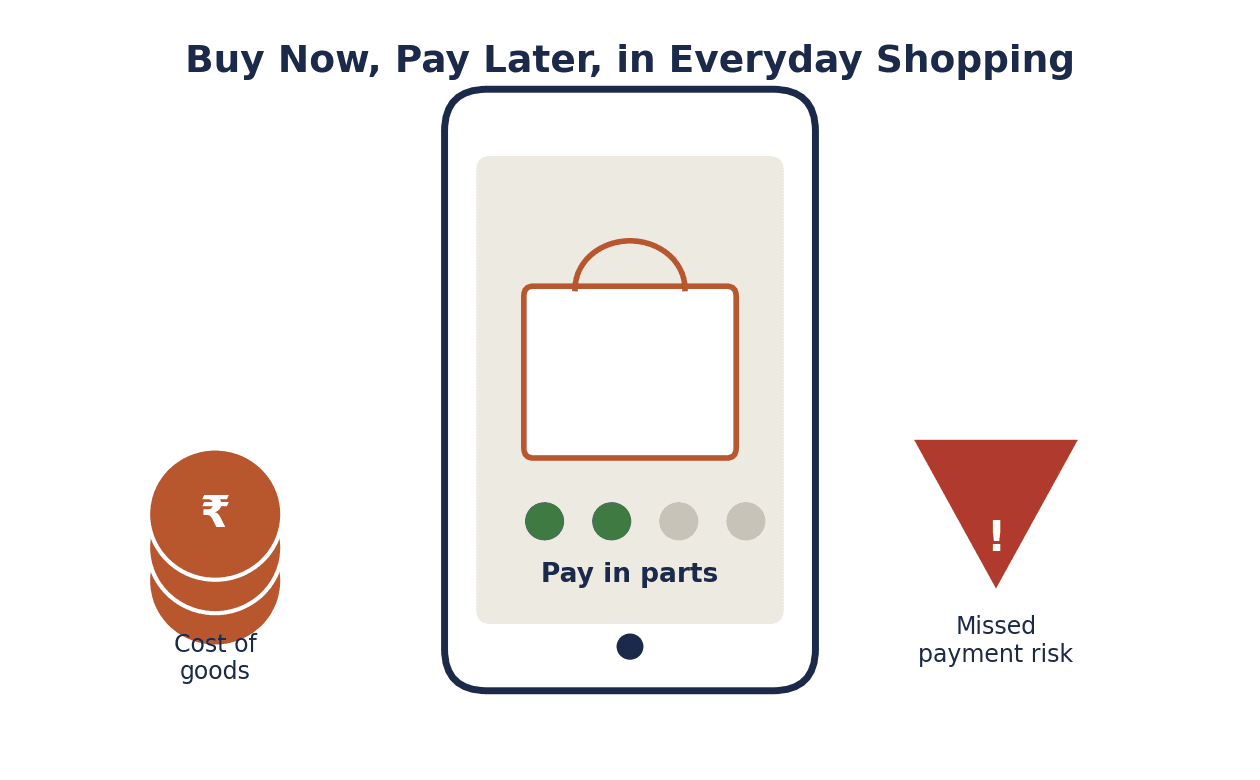
Does Buy Now, Pay Later Help or Hurt People's Money Habits?
Buy Now, Pay Later — usually called BNPL — lets people buy something today and pay for it in small parts later, often without any extra interest cost. It is very popular with people who shop online, because it makes things feel cheaper and easier to buy right away. But for some people, BNPL also brings worry about money and debt. This project asks a simple question: does BNPL really help people manage their money better, or does it quietly cause more financial stress than people realise? It looks at the feelings, habits, and real money outcomes of BNPL users together, instead of studying each one on its own.
#Finance#Consumer Behaviour#Digital Payments